We don't just talk about systemsWe build them

Real problems, turned into systems that workEach project in four steps: pain, structure, system design, outcome

Client projects

FuturePlay

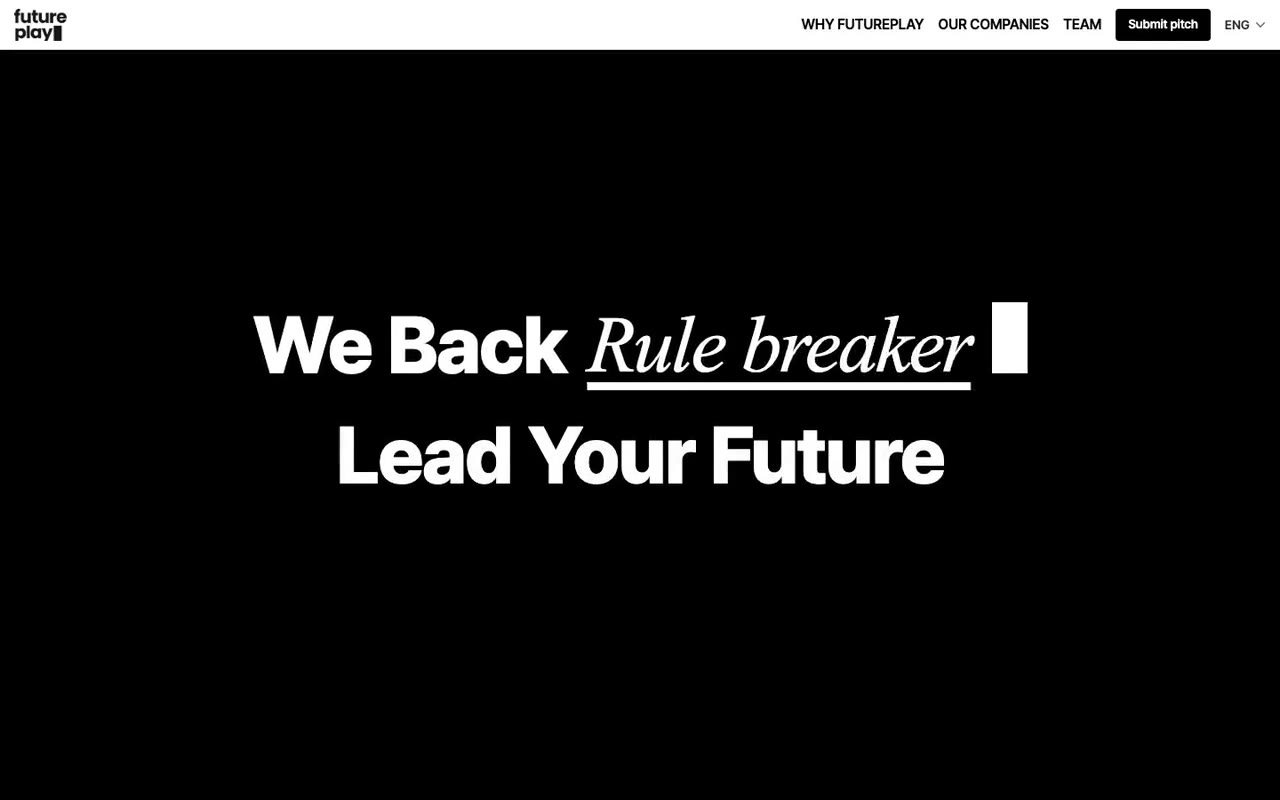
The website of FuturePlay, a deep-tech venture capital firm. We created a brand identity that carries the firm's character across the whole site, and built with it an admin tool where the firm manages every label and piece of content itself, and a deal pipeline for investment proposals
0

Developers needed to publish

100%

Labels and content editable

1

Deal pipeline for proposals

KO · EN

Languages kept in step

PAIN

A site years behind the firm

FuturePlay had grown to support the full startup lifecycle, but its website stayed as it was years ago. The firm needed brand strategy and design that carried its identity and philosophy — and no agency familiar with the VC ecosystem did both branding and engineering well.

Structure

Brand and backstage as one problem

We took the brief as one problem, not two. The identity had to live in the site's own behaviour, not in a style guide; and the site had to keep pace with the firm without a developer in the loop. So the cursor became the brand's core metaphor, and every label and piece of content became something the firm edits itself.

System Design

A site, an admin tool, a deal pipeline

The brand identity is woven into the cursor, the hover states and the typography, visible across the site. Every label and every piece of content is edited and managed directly in the admin tool. An investment proposal management system handles deal flow in the same backstage.

Outcome

A brand asset that keeps evolving

The site is now a brand asset that grows with the market and the company. The firm updates its growing value continuously, without developers, and manages its investment proposals efficiently through its own system.

As the firm grows, the site changes with itwithout developers, at the firm's own pace
Attune

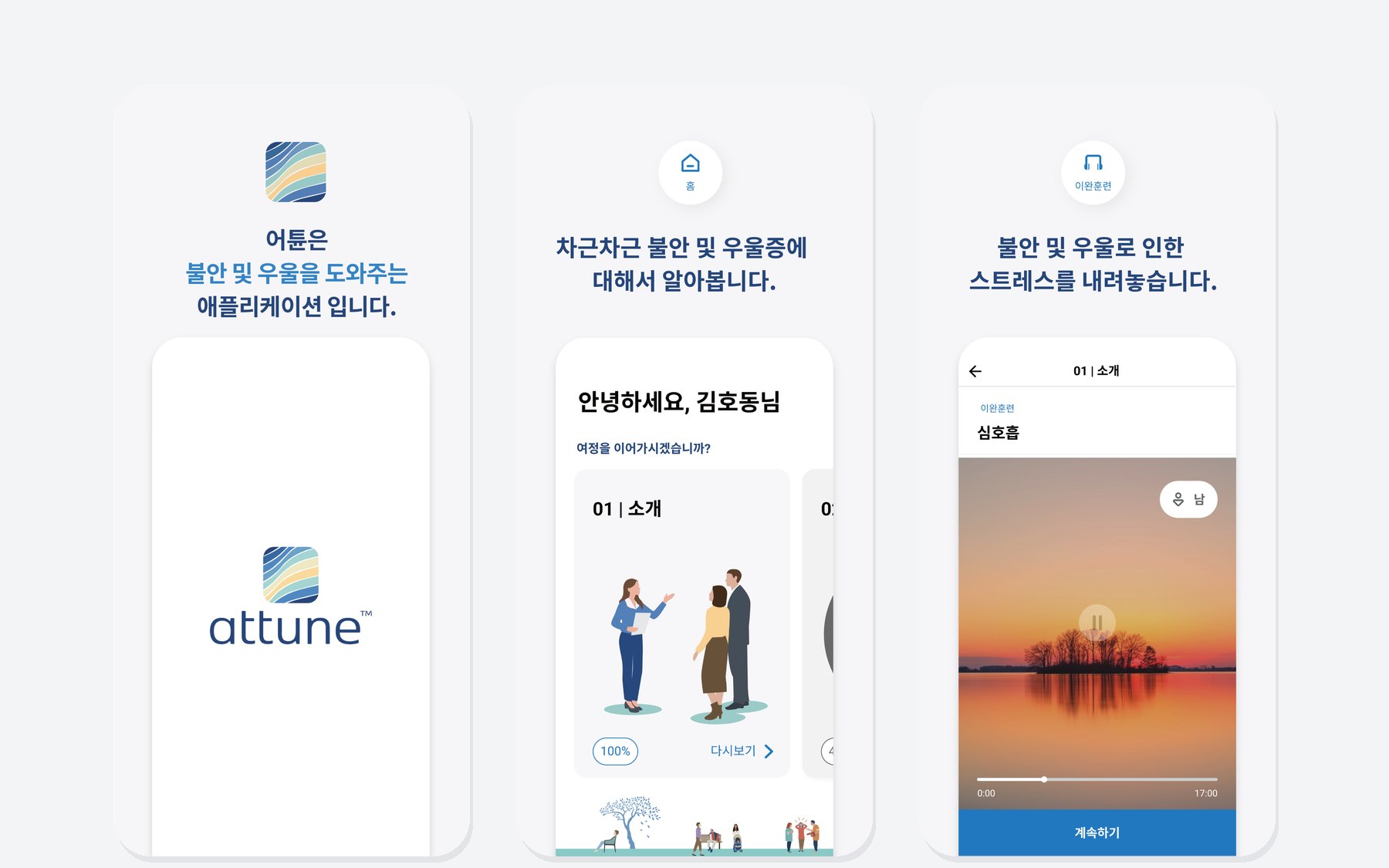
Korea's first digital therapeutic for the anxiety and depression of cancer patients. Building on a license from an overseas company, we localized the app for Korean patients and hospitals, rebuilt and ran its infrastructure, and supported the whole process through the regulator's review

1st

Digital therapeutic of its kind in Korea

0

In-house engineers at the client

2

Platforms shipped, iOS · Android, KO · EN

4

Roles in one partner: customize · build · operate · approval

PAIN

A licence, a regulator, and no engineers

BIXINK Therapeutics, the bio subsidiary of a listed company, had licensed attune from Blue Note Therapeutics: a prescription digital therapeutic for the anxiety and depression of cancer patients, the first attempt of its kind in Korea. The licence gave it the right to localize, to run clinical development and to seek approval — and the company had no technical staff of its own.

Structure

One partner for the whole path

We treated the licence as one path, not four vendors' jobs: customizing the Silicon Valley product for Korean patients and clinics, building the infrastructure the project needed, operating it, and supporting the evaluation a medical device must pass. One partner carried the product from the code to the regulator's desk.

System Design

A localized therapeutic on its own infrastructure

The app for iOS and Android was customized for Korea — the education sessions, the relaxation therapy, the sleep logging and the community — on a GraphQL API with the clinic's backstage behind it. The infrastructure was built and run for the project, with the clinical-trial builds, the instructions for use and the labelling kept in step with the software.

Outcome

Korea's first attempt, carried to evaluation

Attune 1.0 shipped on both platforms in Korean and English, with its clinical-trial version, its instructions for use and its labelling ready for the medical device evaluation. A company without an engineering team could pursue a regulated digital therapeutic in Korea for the first time.

In the press

Bixink Therapeutics brings Blue Note's digital therapeutic for cancer patients to Korea — MEDI:GATE NEWS, 2022Attune app helps patients manage cancer-related anxiety symptoms — Oncology Nursing News, 2023

A company with no engineerscould take on Korea's first digital therapeutic

Clipline

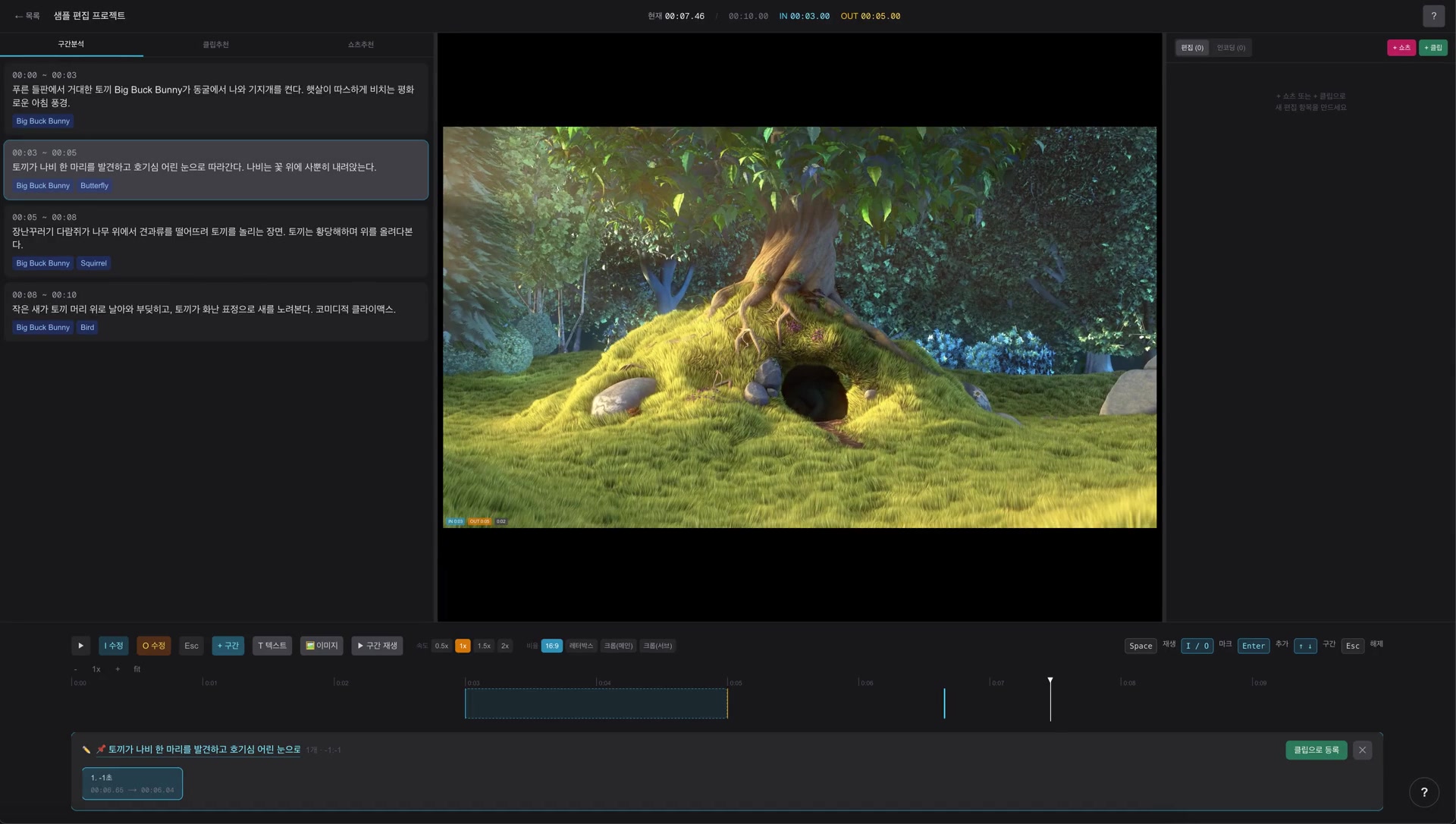
An AI video pipeline for a major Korean media group. We built a system in which AI analyzes the source footage, splits it into meaningful segments and assembles cuts into suggested edits. Overlays, parallel encoding and publishing to the connected social channels follow automatically, so editors spend their time on making good videos

0

Editing suites in the loop

1

Pipeline from footage to channel

9:16

Social formats encoded

Live

In daily operation

PAIN

Hours at Premiere Pro for every clip

Content volume grew every day, but an editor still had to sit at Premiere Pro picking every cut by hand. Discovery, selection, editing and publishing were scattered across different tools, so a single video took hours to ship.

Structure

One line from footage to channel

We treated the whole path as one pipeline rather than four tools. The AI does the discovery and the first cut, people decide the intent, and everything after that decision — overlays, encoding, distribution — runs without anyone opening an editor.

System Design

Analysis, assembly, encoding, distribution

The source footage is analyzed and split into meaningful segments. Cuts are assembled automatically to match the intent of the piece. Text and image overlays are edited for social formats, several encoding jobs run in parallel, and the finished videos go out to the connected social channels on their own.

Outcome

Publishing without an editing suite

The group's channels now publish from the pipeline in daily operation, with no Premiere Pro in the loop. An editor's hours became a selection and a decision, and the volume of content is no longer bounded by the hours at the desk.

Videos go out every daywithout anyone opening an editor

cheKIT

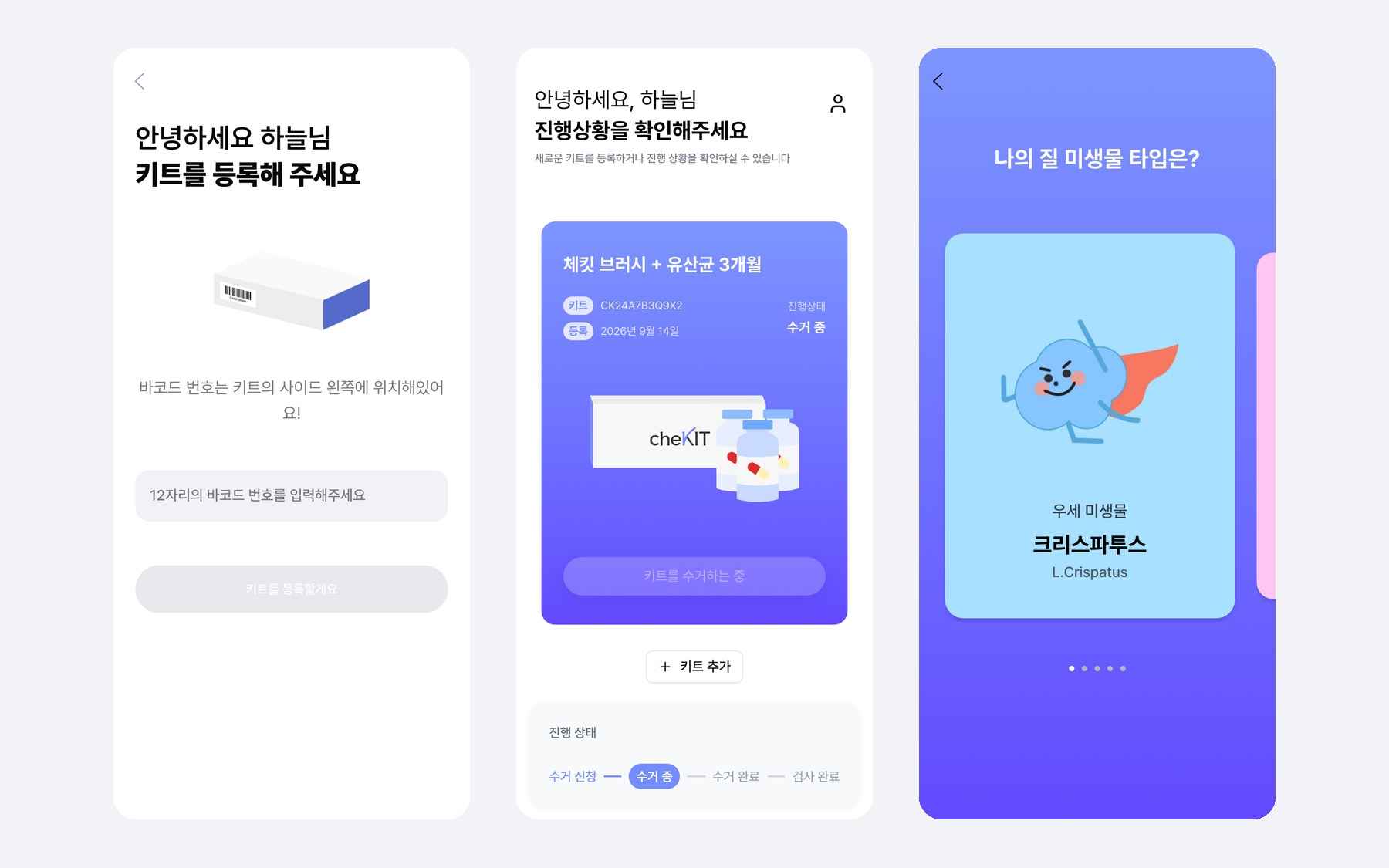
Korea's first at-home vaginal microbiome test service. We built the consumer app where customers see their results and personalized probiotics on their phones, and the back office that manages kit shipping, registration, pickup and analysis. Until the service closed, we rebuilt it three times over five years and ran its own cluster

5 yrs

In operation

3

Generations of the service

12

Repositories maintained

0

Client engineers

PAIN

A test kit with no software behind it

A health startup had a lab test and a kit to ship, but no engineers of its own. Everything between the box and the result — registration, the questionnaire, the pickup, the analysis report, the product recommendation — had to be built, and then kept running, by someone.

Structure

Delivery, registration, result as one path

We took the customer's path as the system. The kit arrives, its barcode registers it, the questionnaire and the consent follow, a courier picks it up, and the result arrives on the phone with the probiotic matched to it. The back office runs the same path from the other side: serials, pickups, results, products, notices.

System Design

Three generations of one service

A Node.js service first. Then Spring Boot microservices for kits, questionnaires, results, coupons, partner settlement and the admin console, with messaging and crawling beside them. Then a rebuild on Java 21 and Next.js with the legacy data migrated across, and in 2026 the whole service moved onto a Kubernetes cluster under GitOps.

Outcome

Five years in operation

The service ran for five years with FXY as its only engineering team, through a TIPS selection and an Olive Young listing, across twelve repositories and three generations of code. The service has since closed; the system carried it the whole way.

In the press

Unicorn Factory 2023Social Value 2025

A test result is where it startswe ran the service for five years so customers could improve their own health

U-CHECK

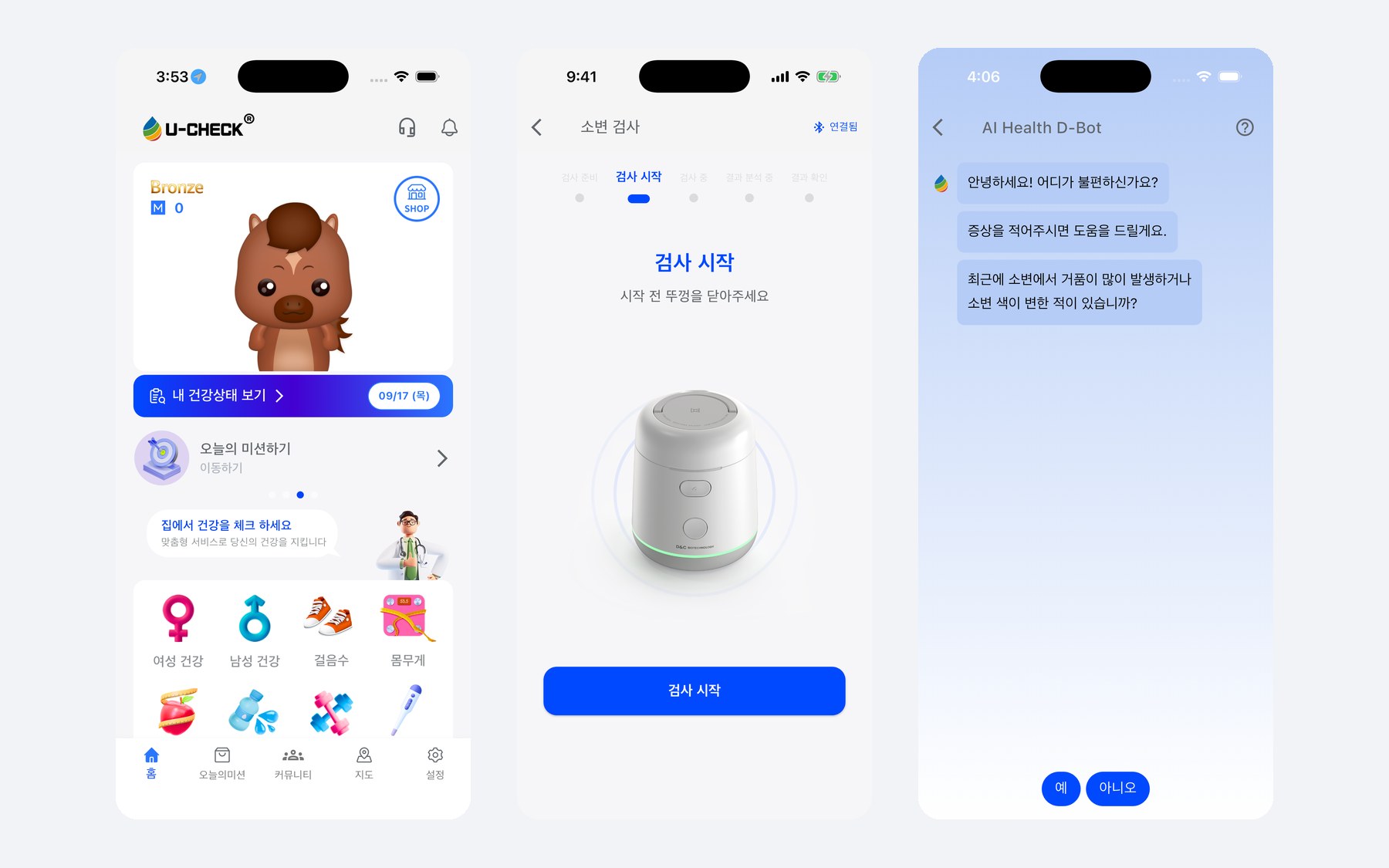
The companion app for DNC BIOTECHNOLOGY's CES award-winning urine analyzer. Commissioned by the device maker, we built the Flutter app and its backend and still run them today. The app connects to the analyzer over Bluetooth, keeps results as a health record, points users to the right clinic through a questionnaire and AI chat, and adds community, missions, mileage and four social logins

BLE

Analyzer paired to the phone

4

Social logins

1

Flutter codebase for iOS and Android

2 yrs

Built and run

PAIN

An analyzer with no app behind it

The device maker had a CES-awarded urine analyzer and a cup-type kit, but a home analyzer is only half a product: the result has to reach a phone, mean something to the person holding it, and lead somewhere. There was no app, no backend and no team to build them.

Structure

The device, the record, the next step

We shaped the app around three things: the analyzer paired over Bluetooth and read reliably, the result kept as a health record the person can follow over time, and a next step — a questionnaire, an AI chat, a map of clinics, a video consultation — so a worrying result is never a dead end.

System Design

One Flutter app, one backend, four ways in

A Flutter app for iOS and Android with the Bluetooth protocol of the analyzer, test results and health management, self-diagnosis questionnaires, community, missions and mileage, a hospital map and telehealth, four social logins and push. A Spring Boot backend behind it, built and run alongside.

Outcome

The app the analyzer ships with

U-CHECK is the companion app the company names in its press and ships with its personal analyzer. Two years on, the device maker's consumer product is a device and an app together, and FXY still carries the app.

In the press

BioTimes 2025AVING 2024

Once the analyzer met the phoneeach test became part of a health record

H CHECK U

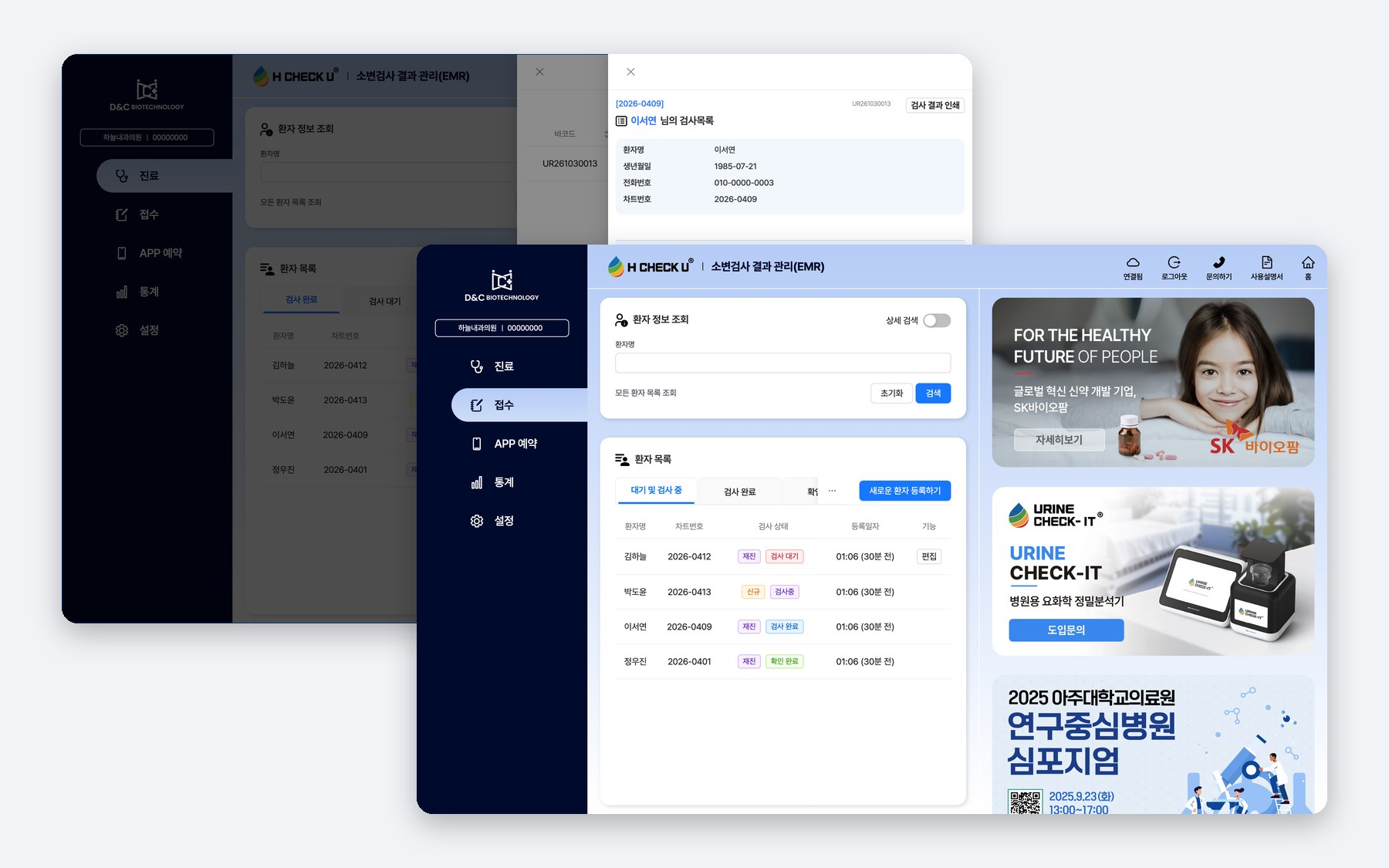
The electronic chart clinics keep beside the urine analyzer. We built the Windows desktop app for reception, consultation, urine test results and statistics, and its Spring Boot server, and packed the server, database and client into one self-updating installer, so patient data never leaves the clinic's PC

1

Installer for server and client

0

Cloud dependencies in the clinic

Signed

Windows build, auto-updated

3

Repositories, two generations

PAIN

A clinic analyzer with nowhere to chart

The clinical analyzer sat beside a reception desk with no software to receive the patient, order the test, read the result and keep it. Clinics would not send patient data to a cloud, and had no IT staff to install a server.

Structure

The whole system inside the clinic's PC

We decided the server would live where the data lives: inside the clinic's own Windows PC. One installer puts the server, its database and the client on the machine; the clinic runs it as one program, backs it up from a screen, and never sees a container or a database.

System Design

Electron over a Spring Boot server in Docker

An Electron desktop with a Next.js interface: reception, treatment, the urinalysis result, statistics, an AI diagnostic aid, device and hospital settings by permission. Beside it a Spring Boot and PostgreSQL server in Docker on the same machine, a server screen to start, stop, back up and restore it, and a signed installer that updates itself.

Outcome

A charting program the clinic owns

H CHECK U is listed among the company's products. A clinic installs one program and charts its urinalysis from reception to result with nothing leaving the building; the second generation of the program was rebuilt in 2026 on the same shape.

In the press

CES Innovation Awards 2024

Patient data never leaves the clinicbecause the whole server lives on the clinic's PC

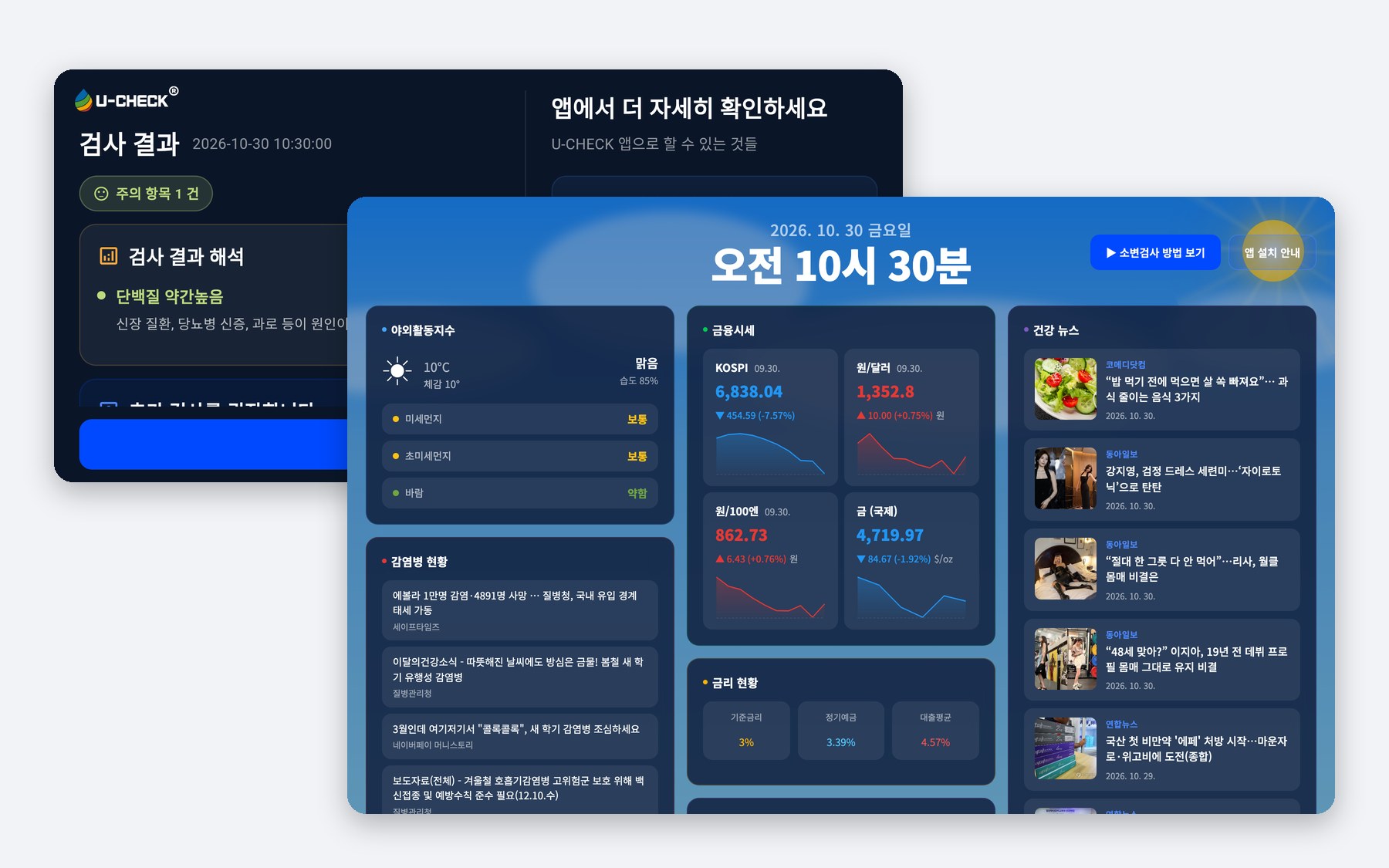
U-CHECK Station

A tablet app for a home urine test service, for checking one's condition before visiting a clinic. We built the app — it connects to the analyzer over Bluetooth, tests each member of the family, and when no test is running shows the day's weather, health news and the clinics nearby — and delivered it with the analyzer to apartment homes. Results and personal data are kept safe and can be sent to a clinic for diagnosis when needed

6

Protocol packets handled

Offline

Results kept without network

1.0.3

Version delivered

4 mo

From first commit to delivery

PAIN

A check at home before the clinic

A home urine test service, for checking one's condition before visiting a clinic. Anyone in the family had to test and read the result easily, with no medical staff around, and a test had to finish even with the connection coming and going. The analyzer spoke Bluetooth; nothing spoke to the analyzer.

Structure

One path anyone can follow

We designed the tablet app around one path: idle, sign in, pick the family member, place the cup, test, remove the cup, result. Every step has a way back to idle, the Bluetooth link lives in a service the screen cannot kill, and a result that cannot be sent is kept safe until it can.

System Design

Bluetooth state machine in a foreground service

A Flutter app with the analyzer's protocol — six packet types parsed into a state machine — running in a foreground service that reconnects on its own, drives the screens through an event stream, and keeps going without the network. Judgement ranges for every urine item are documented against the code. When no test is running, the tablet shows a dashboard served by the backend, useful on any day: the weather and outdoor index, infectious-disease news, the clinics and pharmacies nearby on a map, and the markets.

Outcome

Delivered in four months

From the first commit in December to version 1.0.3 delivered in April, the app runs each check end to end, and the results flow into the maker's platform marked by their source, ready to be sent to a clinic when needed.

Before the clinic,check your body at home first

DNC BIOTECHNOLOGY

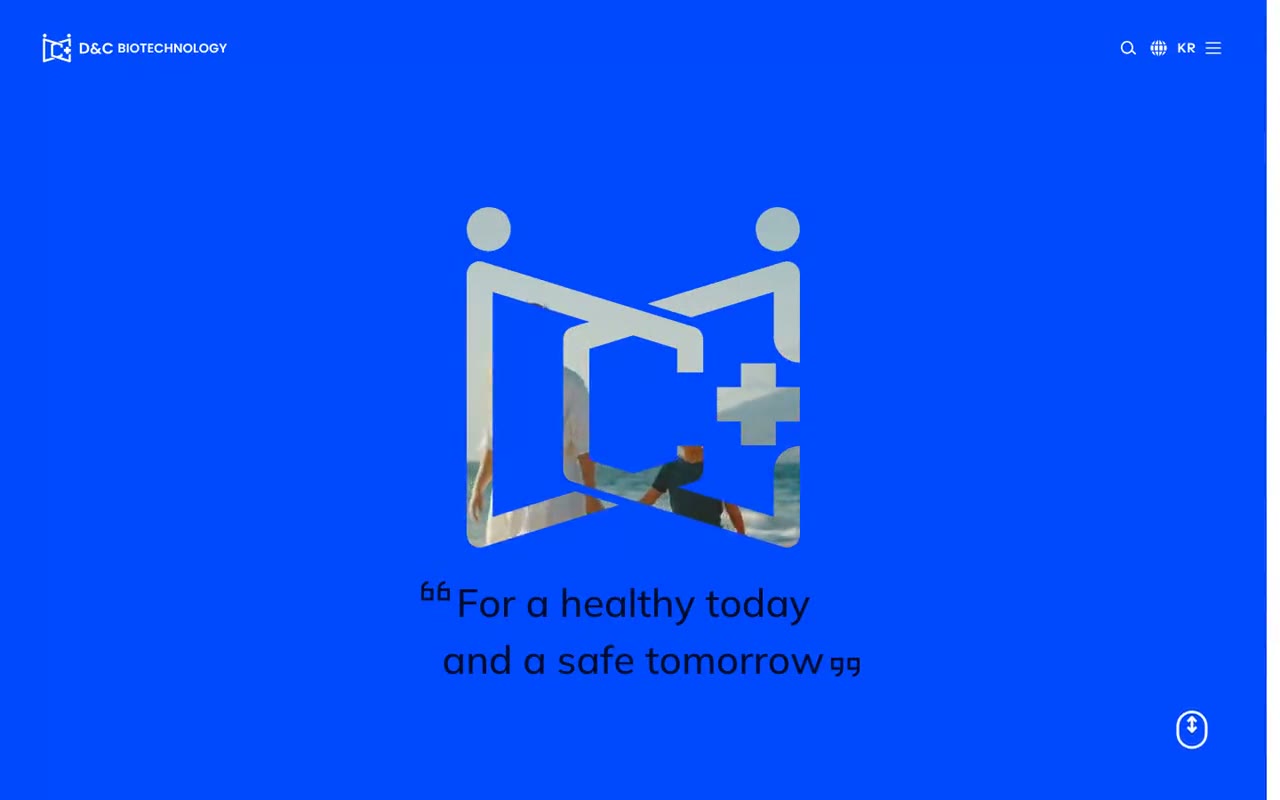
The Korean and English company site of DNC BIOTECHNOLOGY, a maker of urine test devices. We planned and built a scroll-driven main page that introduces the company's philosophy, with pages for its five products, sustainability, careers, investors and support, all on the same system. We also built a system the team can manage in-house at any time, and handed the site over to run on the company's own cloud

KO · EN

Languages

5

Products presented

1

Cloud account handed over

3

Handover documents

PAIN

Five products and a site that said none of it

The company had CES awards, a clinical analyzer, a personal analyzer, a charting program and an app, and a website that could not carry a product page in two languages or a contact form that reached anyone.

Structure

The company's site on the company's own cloud

We built the site so it would outlive us: every word in a locale file in two languages, the pages for the company, five products, sustainability, careers, investors and support, and the whole thing running in the company's own cloud account rather than ours.

System Design

Next.js on the company's cloud, then handed over

A Next.js site with its text in Korean and English locale files, images and video on a CDN, the contact form mailing the company directly, a protected investors section. Built first on FXY's infrastructure, then moved into the company's own cloud account — containers, load balancer, certificates, DNS — and handed over with the run book.

Outcome

A site the company runs itself

dncbiotech.com runs in the company's own account with three documents that let its staff edit, deploy and verify it without us. The site is the one place its five products and two companion programs are presented together.

Every screen comes from one systemso the company can change and grow it on its own

Let's build the system behind your next stage of growth

Whether you're launching a new product, scaling operations, or exploring AI, we'll help transform complexity into a system that works

Strategy session request

Tell us about your pain

What do you need help with?

By submitting, you agree to be contacted about your inquiry

Book a Strategy Session

Let's build the system behind your next stage of growth